Ghosh Lab at the SUNY College of Optometry
Finding the Earliest Triggers of Vision Loss in AMD
We study how organelle dysfunction and immune activation early/dry age-related macular degeneration, and we work toward mechanism-based therapies for a stage of the disease that currently has none.
A Disease With No Treatment and a Growing Population at Risk
Early/dry AMD is the leading cause of irreversible vision loss in older adults. It is shaped by both genetic and environmental factors, and at present there is very little that can prevent it or slow it down.
As lifespan increases, the number of people living with AMD increases with it. The disease is estimated to cost $30 billion a year, and it remains a significant public health problem.
That gap is why this lab exists. Understanding the molecular cascades behind early/dry AMD is the first step toward affordable, targeted treatment. Our group is working to develop patient-specific strategies that delay progression before sight is lost.
Leading Cause
of irreversible vision loss in older adults
$30 Billion
estimated annual cost of AMD
No Approved Therapy
for early/dry AMD
Three Questions Driving Our Work
Our lab uses in vitro and in vivo model systems to identify the signaling pathways that could be targeted to slow AMD. The work runs along three connected lines.
Organelle Dysfunction and Inflammation
What goes wrong inside retinal cells before AMD is visible in the clinic?
We study how failures of autophagy, lysosomal function, and mitochondrial health inside the retinal pigment epithelium trigger inflammatory signaling, including the AKT2, NF-κB, and LCN2/cGAS/STING pathways.
Read More About Organelle Dysfunction
Environmental Risk and the Immune System
How do conditions outside the eye reshape the immune system inside it?
We evaluate how environmental risk factors alter the peripheral immune system during early/dry AMD, and how those changes feed back into the retina.
Read More About Environmental Risk
Immune Cell Interactions in Aging
Which immune cells arrive in the aging retina, when, and what do they do once there?
We examine how neutrophils, microglia, and the interactions between them drive retinal inflammation and degeneration, using both mouse models and human donor tissue.
Read More About Immune Cell Interactions
This work combines genetically engineered mouse models, including novel Akt2 knock-in systems, with advanced molecular and imaging approaches.
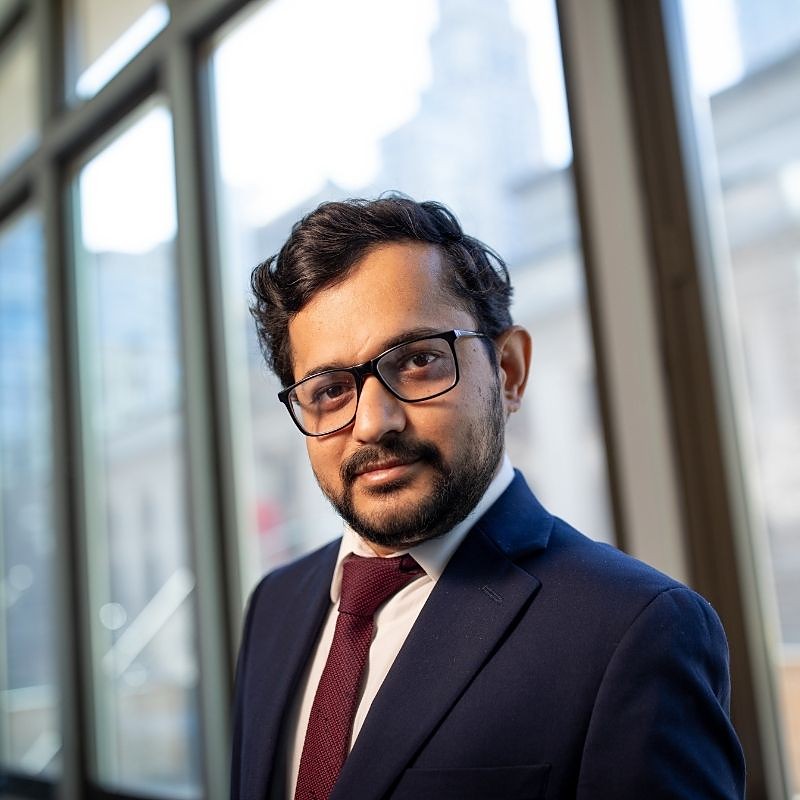
Meet Dr. Sayan Ghosh, PhD
Assistant Professor, Department of Biological and Vision Sciences, SUNY College of Optometry
Dr. Sayan Ghosh leads a research program on the molecular and immunological mechanisms behind retinal degenerative disease, with a focus on age-related macular degeneration. He completed postdoctoral training at the University of Pittsburgh School of Medicine and held a junior faculty position at the Wilmer Eye Institute at Johns Hopkins University School of Medicine, where he built an independent program on retinal pigment epithelium biology and inflammatory signaling. He founded the Ghosh Lab at SUNY College of Optometry in March 2026.
Fulbright-Nehru Doctoral Research Fellowship
BrightFocus Foundation Postdoctoral Fellowship
NIH K99/R00 Pathway to Independence Award
The Team
The Ghosh Lab opened in March 2026 and is building its founding group. Everyone here works at the intersection of retinal cell biology, immunology, and translational vision science.

POSTDOCTORAL RESEARCHER
Dr. Udaykanth Suryavanshi, PhD
Udaykanth completed his PhD at Osmania University, carrying out his doctoral research in the Department of Biochemistry at the ICMR-National Institute of Nutrition. He studied the role of vitamin B12 in diabetic neurodegeneration, and brings expertise in ER stress, proteostasis, and barrier permeability models.
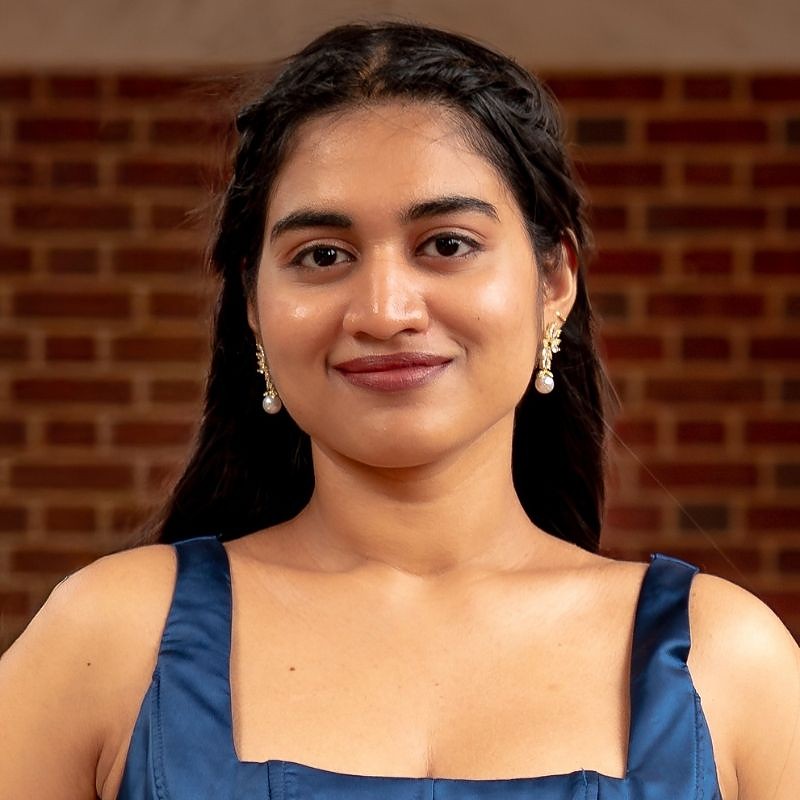
PHD STUDENT, VISION SCIENCE
Sriyanjali Bathula
Sriyanjali came to vision science through chemical engineering and nanomedicine. She holds an MSE in Chemical and Biomolecular Engineering from Johns Hopkins and is now a PhD student in Vision Science at SUNY. Her work centers on retinal organoid models that capture human biology more faithfully than conventional systems.
Join the Lab
We are recruiting postdoctoral fellows, graduate students, and research technicians. Inquiries are welcome year-round.
Nature Communications
2024
The AKT2/SIRT5/TFEB pathway as a potential therapeutic target in non-neovascular AMD
Ghosh S, Sharma R, Bammidi S, et al. Nat Commun. 2024;15(1):6150. doi:10.1038/s41467-024-50500-z
Aging Cell
2025
Activated mTOR signaling in the RPE drives EMT, autophagy, and metabolic disruption, resulting in AMD-like pathology in mice
Chowdhury O, Bammidi S, et al, Ghosh S, Sinha D. Aging Cell. 2025;24(6):e70018. (joint corresponding) doi:10.1111/acel.70018
Communications Biology
2019
Neutrophils homing into the retina trigger pathology in early age-related macular degeneration
Ghosh S, Padmanabhan A, Vaidya T, et al. Commun Biol. 2019;2:348. doi:10.1038/s42003-019-0588-y
News and Lab Life
Conference travel, new results, new people, and what is happening in the lab.
Lab Life
August 2026
Welcome to Our Founding Lab Members
Introducing Dr. Udaykanth Suryavanshi and Sriyanjali Bathula, the first members of the Ghosh Lab.
Lab Life
June 2026
Dr. Ghosh Receives NIH R00 Award
What the award supports, and why early AMD is the target.
Lab Life
March 2026
The Ghosh Lab Opens at SUNY College of Optometry
A new program focused on the earliest stages of age-related macular degeneration.
We Are Building the Founding Team
The Ghosh Lab is recruiting postdoctoral fellows, graduate students, and research technicians interested in retinal cell biology, immunology, and translational vision science. There is no formal opening posted at the moment, and inquiries are welcome year-round.