
Myopia Study Proposes a New Explanation for Why Near Work and Low Light May Drive Nearsightedness
New York, NY — For years, rising rates of myopia — or nearsightedness — have been widely attributed to increased screen time, especially among children and young adults. But new research from scientists at the SUNY College of Optometry suggests the story may be more complicated — and more human.
In a new study published in Cell Reports, researchers propose that myopia may be driven less by screens themselves and more by a common indoor visual habit: prolonged close-up focus in low-light environments, which limits how much light reaches the retina.
The research offers a new hypothesis that could help explain a long-standing puzzle in vision science — why so many seemingly different factors, from near work and dim indoor lighting to treatments like atropine drops, multifocal lenses, and time spent outdoors, all appear to influence myopia progression.
“Myopia has reached near-epidemic levels worldwide, yet we still don’t fully understand why,” said Jose-Manuel Alonso, MD, PhD, SUNY Distinguished Professor and senior author of the study. “Our findings suggest that a common underlying factor may be how much light reaches the retina during sustained near work — particularly indoors.”
A different way of thinking about near work
Myopia affects nearly 50 percent of young adults in the United States and Europe and close to 90 percent in parts of East Asia. While genetics play an important role, rapid increases over just a few generations suggest environmental factors are also critical.
Scientists have long known that:
- Spending more time outdoors appears to protect against myopia
- Extended near work is associated with increased risk
- Treatments as different as atropine eye drops, multifocal lenses, and contrast-reducing optics can slow progression
What has been unclear is why these diverse approaches work.
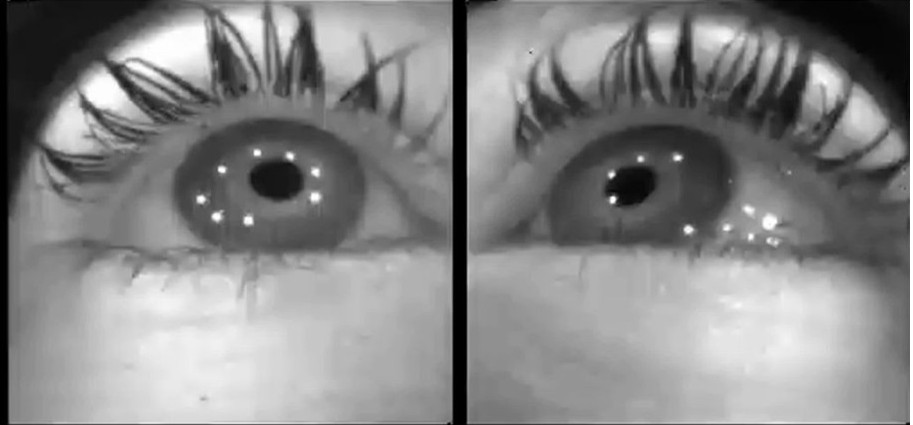
SUNY Optometry researchers propose a unifying explanation centered on the pupil — the eye’s natural “aperture,” similar to a camera diaphragm.
“In bright outdoor light, the pupil constricts to protect the eye while still allowing ample light to reach the retina,” explains Urusha Maharjan, SUNY Optometry doctoral student who conducted the study. “When people focus on close objects indoors, such as phones, tablets, or books, the pupil can also constrict, not because of brightness, but to sharpen the image. In dim lighting, this combination may significantly reduce retinal illumination.”
According to the researchers’ hypothesis, reduced retinal stimulation over long periods may weaken specific neural pathways involved in visual processing, contributing to myopia development and progression.
Explaining what we already observe
The proposed mechanism may help explain several well-known observations:
- Why outdoor time is protective: bright light keeps retinal stimulation high
- Why atropine may slow myopia: it limits pupil constriction, allowing more light into the eye
- Why certain lenses help: they reduce the need for strong close-up focusing
- Why prolonged indoor near work under low light may be particularly problematic
Importantly, the study does not claim that screens directly cause myopia, that light alone explains the condition, or that genetics are unimportant. Rather, it offers a testable hypothesis that reframes how visual habits, lighting, and eye focusing interact.
“This is not a final answer,” Alonso emphasized. “It’s a hypothesis grounded in measurable physiology that brings together many pieces of existing evidence. More research is needed, but it gives us a new way to think about prevention and treatment.”
Implications for families and clinicians
While the findings do not change clinical guidelines overnight, they may help inform future research, public health strategies, and conversations around children’s visual habits — especially as digital devices become a constant part of daily life.
The study was conducted by Urusha Maharjan in the laboratories of Jose-Manuel Alonso at SUNY College of Optometry.
Additional press packet materials are available.
About SUNY Optometry
Founded in 1971 and located in New York City, the State University of New York College of Optometry is a leader in education, research, and patient care, offering the Doctor of Optometry degree as well as MS and PhD degrees in vision science. The College conducts a robust program of basic, translational, and clinical research and has 65 affiliated clinical training sites as well as an on-site clinic, the University Eye Center. SUNY Optometry is regionally accredited by the Commission on Higher Education of the Middle States Association of Colleges and Secondary Schools; its four-year professional degree program and residency programs are accredited by the Accreditation Council on Optometric Education of the American Optometric Association. To learn more about SUNY Optometry, visit www.sunyopt.edu.
###