
College's Participation in Clinical Trials Contributes to FDA Authorization of Essilor Stellest® Spectacle Lenses, Named One of TIME's Best Inventions of 2026
NEW YORK, NY — A groundbreaking new eyeglass lens developed by EssilorLuxottica and designed to slow the progression of nearsightedness in children marks a major milestone for an innovation that SUNY College of Optometry helped bring to patients through years of clinical research. Recently named one of TIME magazine's Best Inventions of 2026, Essilor Stellest® lenses are the first spectacle lens authorized by the U.S. Food and Drug Administration (FDA) to slow the progression of myopia, or nearsightedness, in children. SUNY Optometry's Clinical Vision Research Center (CVRC) was one of nine clinical research sites that participated in a multiyear study evaluating the technology's effectiveness, helping provide the scientific evidence supporting its FDA authorization in 2025.
“This is exactly the kind of impact we strive to achieve at SUNY Optometry — translating years of scientific research to meaningful advances in patient care,” said Dr. David Troilo, President of SUNY College of Optometry. “Our participation in the clinical trials that helped bring Essilor Stellest® lenses to patients demonstrates the important role academic health centers like ours play in developing and evaluating new treatments. To see this innovation now available to the children and families we serve after years of basic and translational research in our labs and clinics is especially rewarding.”
Myopia is a growing public health concern, particularly among children, whose nearsightedness can worsen as their eyes develop. Beyond the need for stronger prescriptions, higher levels of myopia are associated with an increased lifetime risk of serious eye conditions, including retinal detachment, glaucoma, and other vision-threatening complications.
Unlike traditional eyeglasses, which correct blurry distance vision but do not slow myopia progression, Essilor Stellest® lenses use specialized optical technology designed to reduce the rate at which nearsightedness worsens. Clinical research found that children wearing these lenses experienced an average of 71 percent less myopia progression over two years compared with children wearing conventional single-vision lenses.
The research builds on a longstanding relationship between SUNY Optometry and EssilorLuxottica, dating back to an earlier clinical study initiated in 2014. SUNY Optometry's participation in this study began in 2022 under the direction of Dr. Josianne Manasse, a clinical research optometrist at the College's Clinical Vision Research Center. The multicenter, randomized, double-masked trial involved participants ages 6 to 12. The study continued through 2026, contributing to a growing body of evidence supporting the use of spectacle lenses as an option for managing childhood myopia.
“For many years, families looking to slow the progression of myopia in their children have had a limited range of treatment options,” said Lynval W. “Wayne” Spencer, Director of the Clinical Vision Research Center at SUNY Optometry. “Essilor Stellest® represents an important advancement because it offers children and parents a noninvasive treatment option in the form of eyeglasses. Our research team is proud to have contributed to the clinical evidence behind this technology and to now see it making a difference in patient care.”
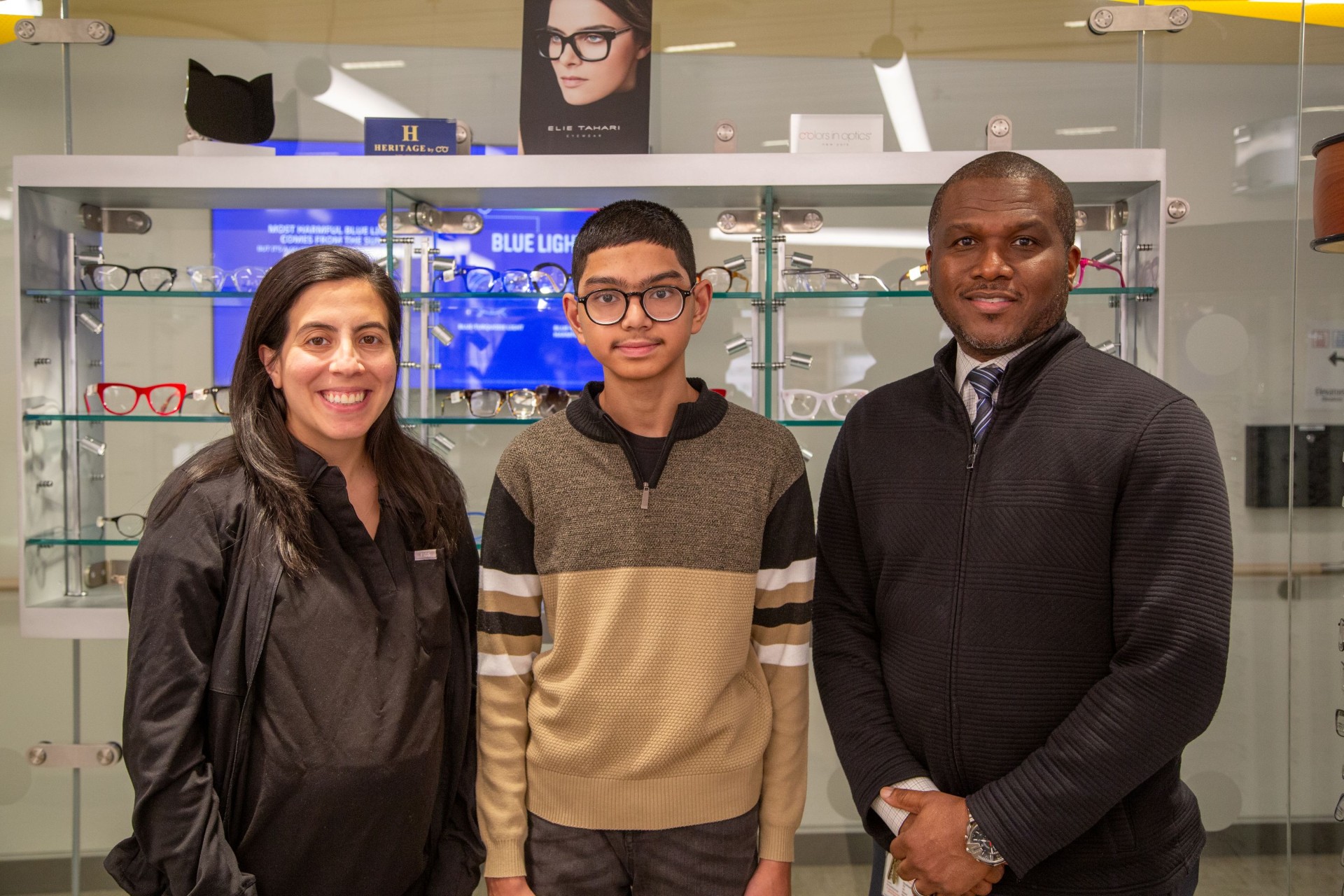
That transition from clinical research to patient care is already underway at the Myopia Management Clinic in SUNY Optometry's University Eye Center, one of the nation's largest academic optometric clinics. In February 2026, the Center fitted its first patient with the lenses, bringing the technology directly to a child receiving care at the institution that helped evaluate its effectiveness.
The recognition by TIME, which included Essilor Stellest® in its annual Best Inventions list in October 2026, underscores the growing potential of myopia management technologies to improve long-term eye health for children around the world.
For SUNY Optometry, the milestone highlights the value of integrating clinical research with patient care — allowing advances evaluated by the College's researchers to become new treatment options for the patients and communities it serves.
About SUNY College of Optometry
Founded in 1971 in New York City, the State University of New York College of Optometry is the only school of optometry in the state and a nationally recognized leader in optometric education, vision research and patient care. The College prepares the next generation of eye care professionals through its Doctor of Optometry program, residency programs and advanced graduate degrees in vision science, including MS and PhD programs. As an academic health center in optometry dedicated to advancing eye and vision care, SUNY Optometry conducts a robust portfolio of basic, translational and clinical research focused on improving diagnosis, treatment and understanding of visual disorders. Beginning in fall 2027, the Doctor of Optometry degree will be offered in both New York City and Syracuse, providing students the opportunity to choose where they live and practice.
###