
Longitudinal Myopia Study Will Track Children’s Real-World Visual Habits to Better Understand How Myopia Develops & Progresses
New York, NY — SUNY College of Optometry announced today that a team of faculty researchers led by Xiaoying Zhu, OD, PhD, MD, MS, FAAO, has been awarded a $500,000 Myopia Research Grant from the American Academy of Optometry Foundation (AAOF) and Meta Reality Labs Research to study how children’s everyday visual experiences may contribute to the development and progression of myopia, or nearsightedness.
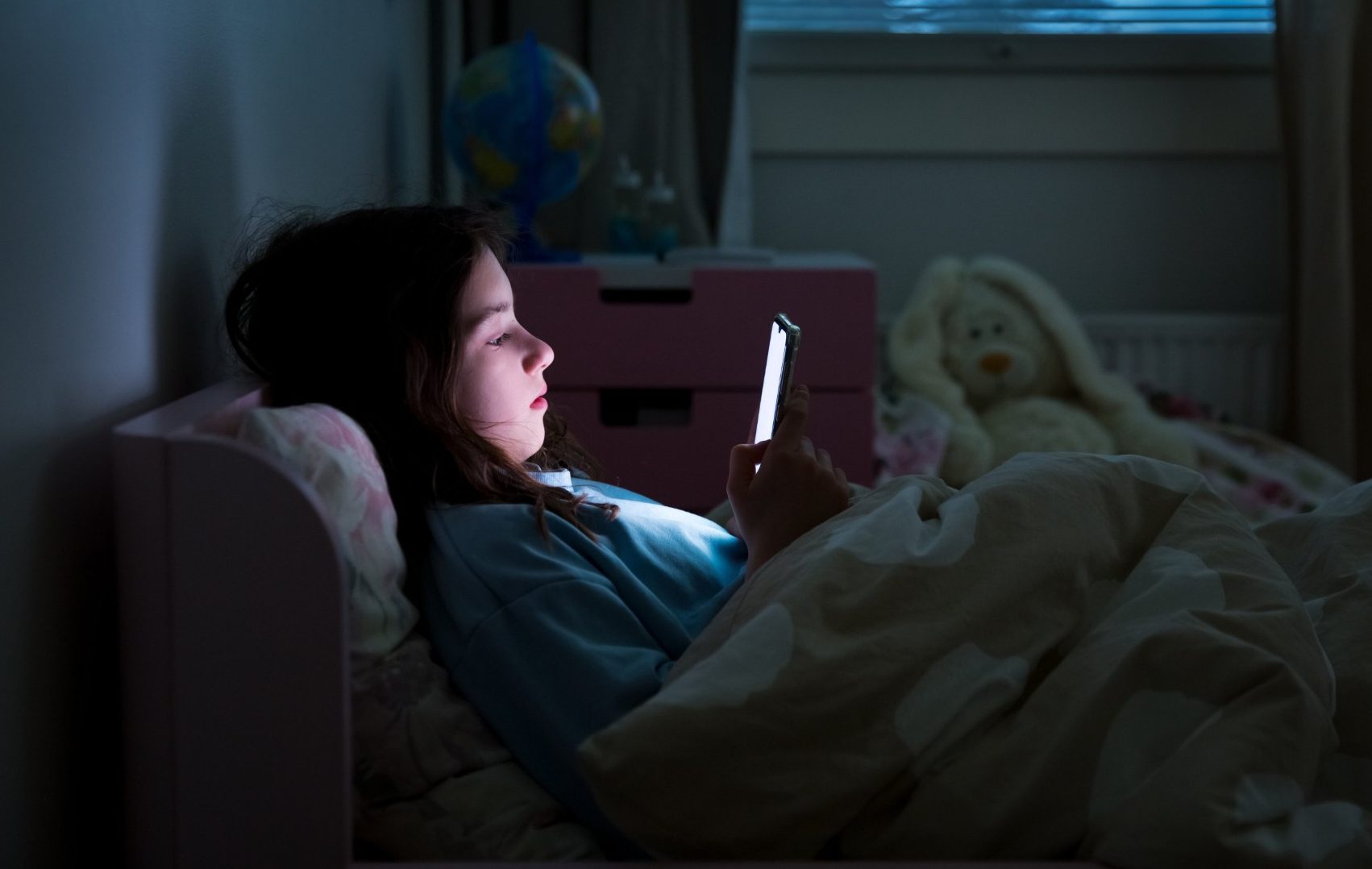
The three-year study, “Longitudinal measurements of visual diet and visuomotor activity in children,” will follow 60 children ages 7 to 12 using wearable sensor technology and eye-tracking tools to measure how they use their eyes in daily life. Researchers will study the children’s “visual diet,” including factors such as near work, reading distance, screen use, lighting conditions and eye movement behavior, both at home and in laboratory settings.
“This study gives us an opportunity to measure children’s visual experiences in a much more systemic, complete and objective way,” said Dr. Zhu, Associate Clinical Professor and Lead Clinician for Myopia Management at SUNY Optometry’s University Eye Center. “Instead of looking at one factor at a time, we will be able to study how near work, lighting, eye movements and other behaviors work together over time. Our goal is to identify measurable signs of risk that can eventually help clinicians to better understand myopia risk and provide more personalized guidance and interventions for children.”
“This grant is an important addition to the myopia research activity at SUNY and our commitment to advancing science that improves eye care in all areas, but particularly for children and families,” said Dr. David Troilo, President of SUNY College of Optometry. “Congratulations to the entire research team on this important project, with special thanks to Dr. Zhu for her leadership in advancing work that helps transform how we understand, monitor and manage myopia in children.”
Myopia is a growing global public health concern, particularly among children. While genetics play an important role, researchers are increasingly focused on how environmental and behavioral factors — including near work, time outdoors, lighting and device use — may interact over time to influence eye growth and vision development.
The SUNY Optometry study is designed to move beyond studying those factors individually. By collecting real-world data over several years, the research team will examine how children’s visual habits and physiological responses interact, and which patterns are most strongly associated with myopia onset and progression.
The research team will use advanced statistical and machine learning methods to analyze the data and identify visual habits and biomarkers that may help predict myopia development or progression. If successful, the study could help inform evidence-based guidelines for families and clinicians as well as support more individualized approaches to preventing or slowing myopia in children.
The project adds to SUNY Optometry’s broader research activity on myopia, which includes experimental research on myopia development by Dr. Alexandra Benavente-Perez; experimental and clinical work by Dr. Lisa Ostrin; clinical trial research on myopia treatments in the College’s Clinical Vision Research Center; and, most recently, studies examining how near work, light exposure and visual behavior may contribute to nearsightedness by research team members Dr. Jose-Manuel Alonso and Dr. Jingyun Wang.
Dr. Zhu and the study team will be formally recognized during American Academy of Optometry 2026 Meeting in Anaheim, CA during the Foundation First Night event on Wednesday, September 30.
***
State University of New York College of Optometry
Founded in 1971 in New York City, the State University of New York College of Optometry (SUNY Optometry) is the only school of optometry in the state and a nationally recognized leader in optometric education, vision research, and patient care. The College prepares the next generation of eye care professionals through its Doctor of Optometry program, residency programs, and advanced graduate degrees in vision science, including MS and PhD programs. As an academic health center in optometry dedicated to advancing eye and vision care, SUNY Optometry conducts a robust portfolio of basic, translational, and clinical research focused on improving diagnosis, treatment, and understanding of visual disorders. Beginning in Fall 2027, the Doctor of Optometry degree will be offered in both New York City or Syracuse, providing students the opportunity to choose where they live and practice.
University Eye Center
As part of an academic health center in optometry, SUNY Optometry’s University Eye Center (UEC) is one of the largest academic optometric clinics in the country where outstanding patient care, education, and research align. Providing primary, specialized, and medical eye care services to more than 55,000 patients a year from the New York City metropolitan area and beyond, the UEC offers students hands-on training alongside some of the nation’s top optometrists in pediatric eye care, specialty contact lenses, myopia management, dry eye care, glaucoma management, ocular disease clinics, care for traumatic brain injury, vision rehabilitation, and more.
###